


Artificial Intelligence can help overcome "maths anxiety".
Silvia Leal is one of the most authoritative voices in Spain when it comes to reflecting on the impact of technology on society. Author of books such as "Y de repente...llegó el metaverso" (2022) or "No te vas a morir: impacto de la robótica y la inteligencia artificial sobre nuestra vida personal y profesional" (2017), Silvia is also a member of the OECD Global Technology Forum's Expert Group on Technology and an investor in startups.
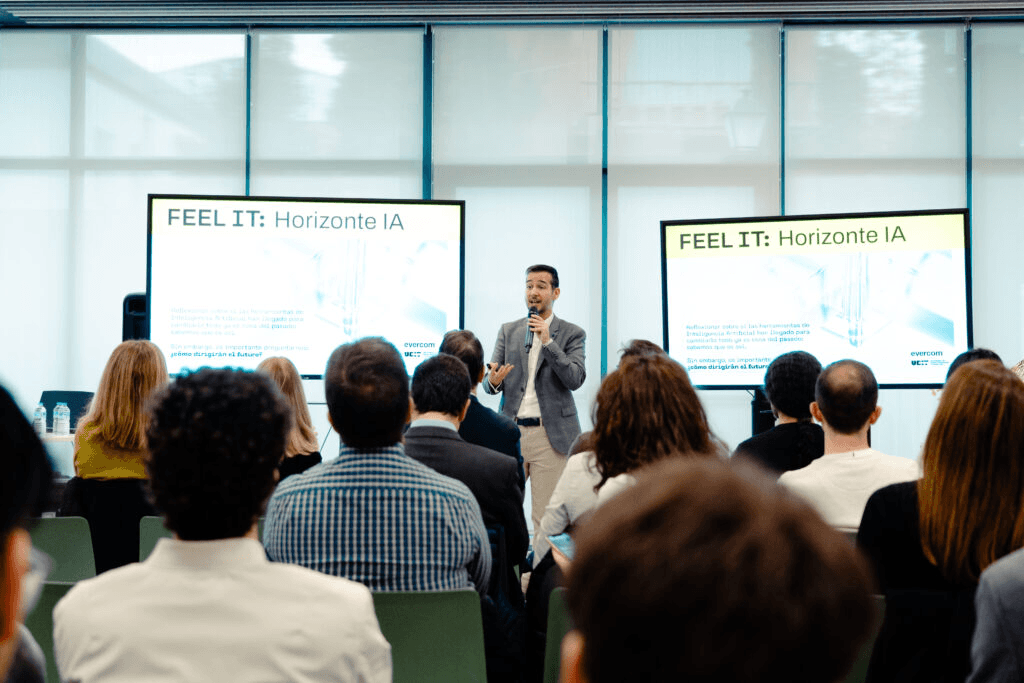
In her column for the second edition of the study "FEEL IT: Horizonte IA" prepared by evercom (creative communications and marketing agency) and UDIT (University of Design, Innovation and Technology), she reflects on the potential of Artificial Intelligence in the field of education. It highlights that, although doubts remain about its effectiveness, data shows that AI can transform learning, especially in critical areas such as mathematics.
In this regard, he points to a significant problem: 60% of university students suffer from "maths anxiety", a barrier that affects both their academic performance and their future careers. "This is particularly worrying given that we are facing an uncertain future, in which few things are as clear as the fact that our children's mathematical skills will be a key factor in their employability," he says.
In this context, she mentions the success of AI-based educational applications, such as the British programme Rising Stars, which has reduced the time needed to learn standard mathematical content from seven months to just 14 weeks. In addition, the author highlights other advantages that AI brings to education, not only for children and young people, but also for adults:
- Interactivity, providing the learning process with an attractiveness that increases motivation.
- Personalisation, adapting content and difficulty to the evolution of each student.
- Accessibility, which opens up opportunities for people with disabilities or in remote areas.
- Flexibility, allowing each student to learn at their own pace and according to their availability.
Finally, Leal invites us to reflect on the crucial role of these tools in a future in which continuous training and professional retraining are more necessary than ever. If these tools can even help us to solve a historical problem of such magnitude as anxiety," he says.
If these tools can even help us solve a historical problem of such magnitude as mathematical anxiety, what might they not be able to do for us now that we have entered the era of learning?
"FEEL IT: Horizon IA
The second edition of FEEL IT, the report on technological perception that evercom produces every year and which on this occasion has been developed in conjunction with UDIT, was created with the aim of understanding how AI has been integrated into the lives of citizens, both in the personal and professional spheres. The aim is not only to analyse the patterns of use of these resources, but also to understand what doubts and expectations they generate in people and companies.
The data collection for this report has been carried out through two online surveys to different population groups: citizens and representatives of the business sector. The fieldwork was carried out between 2 and 25 September 2024 and responses were collected from 700 people and 100 profiles of interest who hold senior management positions or are owners of companies operating in Spain.
More information
90% of Spanish companies already use AI tools.
Why study a Master in Artificial Intelligence?
How much does an AI expert earn?


