


Five programmers who have led the coding revolution
The world will belong to programmers or it will not. Names such as Richard Stallman, Brendan Eich or Margaret Hamilton are fundamental to understanding how technology has become a fundamental part of most of the activities we carry out in our daily lives, from taking a photograph with a smartphone, to surfing the Internet or withdrawing money from an ATM.
Far less recognised than sportsmen and women or famous influencers, the men and women who have led the "code revolution" in the 20th and 21st centuries have been instrumental in shaping life as we know it.
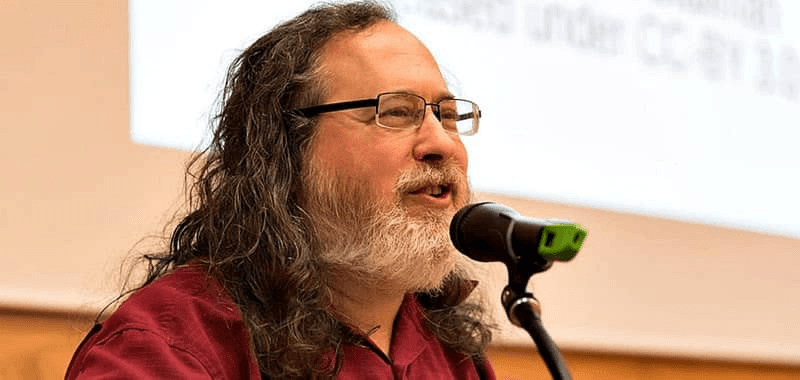
Richard Stallman
Main contribution: Founder of the free software movement and creator of the GNU project
Richard Matthew Stallman began his career at MIT, where he worked as a hacker on one of the first artificial intelligence projects launched by the institution. In 1983, with the aim of creating a completely free operating system (freedom to use, freedom to study, freedom to distribute and freedom to improve), he launched the GNU project (GNU's Not Unix, an operating system based on proprietary software).
His work was fundamental to the development of GNU/Linux, since many of the system's tools (such as the GCC compiler or the file system) came from the GNU project. When Linus Torvalds created the Linux kernel in 1991, he combined it with these pieces to form the operating system that today is used by millions of people and forms the basis of more than 90% of the world 's servers and data centres.
In addition, in 1985 he founded the Free Software Foundation, a non-profit organisation that aims to promote and defend free software and the rights of users to control the technology they use.

Barbara Liskov
Main contribution: Pioneer of object-oriented programming and creator of the CLU language.
Barbara Liskov was the first woman in the United States to earn a PhD in computer science, awarded by Stanford in 1968. Her work has greatly influenced the design of programming languages and software architecture, so much so that in 2008 she was awarded the Turing Award, the highest international recognition in the world of computer science.
Her CLU language, developed in 1973 with the aim of exploring new ways of organising code, introduced key concepts such as data abstraction and exception handling that were later adopted in languages such as Python, Java and C# .
In addition, together with Jeannette Wing (her 2006 essay "Computational Thinking" is a must), he formulated Liskov's Principle of Substitution, which is essential for ensuring consistency and robustness in object-oriented software.
Liskov has also been an active advocate for the participation of women in science and technology, as one of the most prominent mentors for several generations of female researchers.
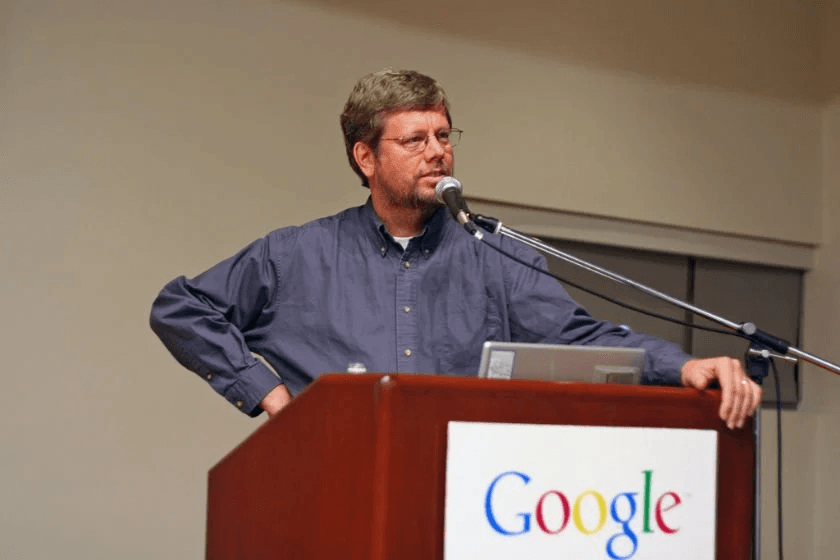
Guido van Rossum
Major contribution: Creator of Python.
Guido van Rossum started the development of Python in the late 1980s at Centrum Wiskunde & Informatica (CWI) in the Netherlands. His goal was to create a programming language that was easy and "fun to use" (hence the Monty Python references).
It quickly endeared itself to programmers thanks to its clear syntax and its possibilities in multiple fields: from the development of simple applications to its potential to analyse huge volumes of data, making it an indispensable ally for artificial intelligence specialists.
His friendly character and the support he has received from the community made him Python's "Benevolent Dictator For Life" (BDFL) for decades, until 2018, when he decided to step aside.
During his career, Guido van Rossum has worked for organisations such as Dropbox, Google and Microsoft and his vision has revolutionised the way programming is currently taught and applied.
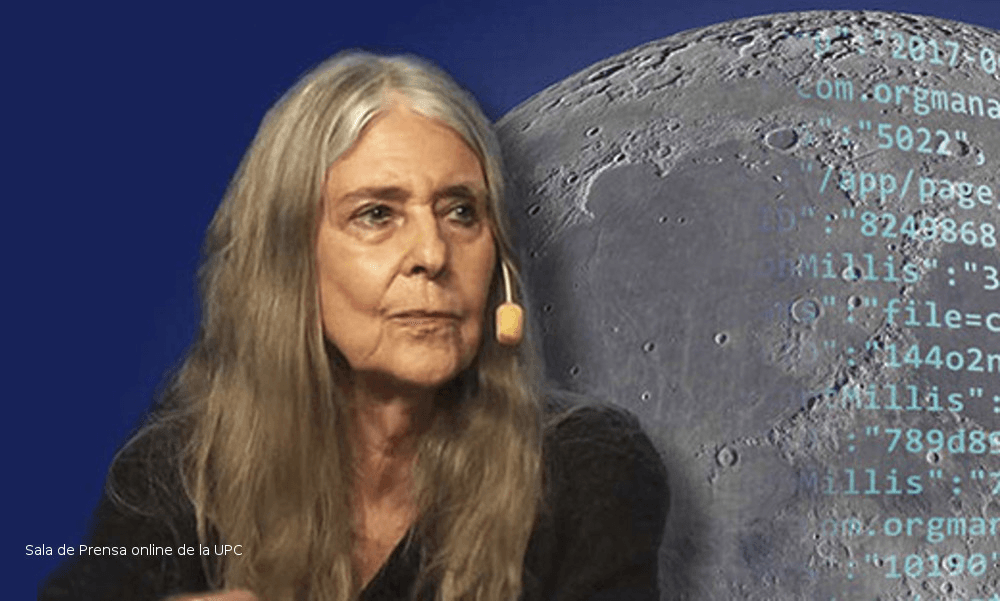
Margaret Hamilton
Major contribution: Leader of the Apollo software team (NASA), creator of the concept of "software engineering".
Margaret Hamilton led the team that developed the navigation and control software for the Apollo missions at the MIT Instrumentation Laboratory. She pioneered the use of formal methods in the development of critical software, and coined the term "software engineering" to emphasise its importance.
Under her leadership, the Apollo 11 software was able to avoid fatal failure by automatically prioritising critical tasks during the moon landing, allowing Neil Armstrong and Buzz Aldrin to reach the lunar surface safely. Indeed, this ability to anticipate errors and design resilient systems changed forever the perception of software as a serious discipline.
Hamilton later founded his own company, Higher Order Software, specialising in developing reliable software for complex systems. She has received numerous awards, including the Presidential Medal of Freedom (awarded by the President of the United States, considered the highest civilian award in the country), and continues to exemplify leadership in a field where she was one of the first women to excel.
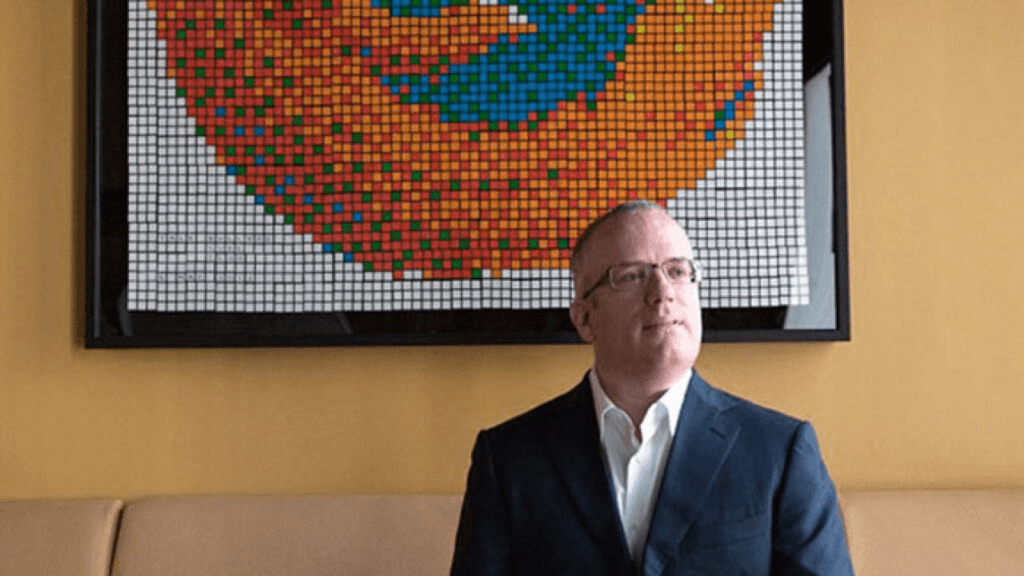
Brendan Eich
Major contribution: Creator of JavaScript.
Before rising to global programming fame, Brendan Eich worked at two of the most important technology companies of the 1990s: Silicon Graphics (developing high-performance graphics hardware) and Netscape Communications, known for its famous web browser, Netscape Navigator.
In 1995, Eich created JavaScript in just ten days, responding to the urgent need for a scripting language for the web. What began as a simple add-on eventually became one of the world's most influential languages, present in almost every modern web page.
In 1998, in response to the dominance of Microsoft Internet Explorer, Netscapedecided to open source its browser and created the Mozilla project as an Open Source initiative, giving rise to such well-known products as Mozilla Firefox and the Mozilla Thunderbird e-mail manager.
In his new position within the organisation, Eich went on to lead the development of the JavaScript engine (SpiderMonkey), and in 2014, he was appointed CEO of the organisation. Shortly after, he founded Brave Software, from where he launched the Brave browser, focused on user privacy and the use of blockchain.
MORE ABOUT BRAVE SOFTWARE
What do I need to know if I want to work in Full Stack Development?
What does a full stack developer do? Solving bugs in a streaming app
Spotify and maths: here's the formula for its music recommendations


