

Dr. Luis Peña
PhD in Computer Engineering from the Universidad Rey Juan Carlos. Founder of a Technology Startup, awarded by ActuaUPM, focused on the development of tools for the creation of digital content. My research has fo

Registration Open
What if we designed a Computer Engineering degree around what businesses will need tomorrow?
Shaped by insights from senior executives and technology leaders from OHLA, Carrefour, HP, IBM, DXC, MAPFRE and Indra, we have created a degree that goes far beyond traditional computer science.
Introducing The Ultimate Degree: a business-focused Computer Engineering degree shaped by industry and designed to prepare you for it.

If you’d like to find out more, please fill in this form and we’ll get in touch with you as soon as possible. We’ll send you the official prospectus, which contains all the detailed information about the programme, the curriculum, career prospects, the admissions process and much more, so that you can make the best decision.

Visit the campus and get answers to your questions about the degree, admissions and scholarships. Free event with limited places.
Technology is key to the operation, innovation and growth of any business. That is why, at UDIT, we want to prepare you for a market that needs professionals capable not only of developing technology, but also of understanding where and why to apply it. In Spain, employment in the technology sector has grown by 76 per cent over the last decade, with around 940,000 technical roles linked to the digital sector.
To address this reality, we have established a Computer Engineering programme in collaboration with those who have first-hand knowledge of the sector’s challenges. Guided by executives and technology leaders from OHLA, Carrefour, HP, IBM, DXC, MAPFRE and Indra, we have developed a degree programme that goes far beyond traditional computer science to meet the needs of businesses. A Computer Science degree designed for the new technological landscape, with a solid foundation in computer science, cross-disciplinary focus on AI and cybersecurity, and designed to bridge technology, business and digital transformation.
You will be trained to understand business, identify opportunities, make decisions, work with professionals from other disciplines and tackle real-world challenges. You will learn by doing from day one, collaborate with companies, take part in technological challenges, gain access to work placements and become part of a unique ecosystem where technology, creativity and entrepreneurship come together. With international experiences, official certifications and access to unique facilities, you’ll prepare yourself for one of the most promising and in-demand professions on the market.
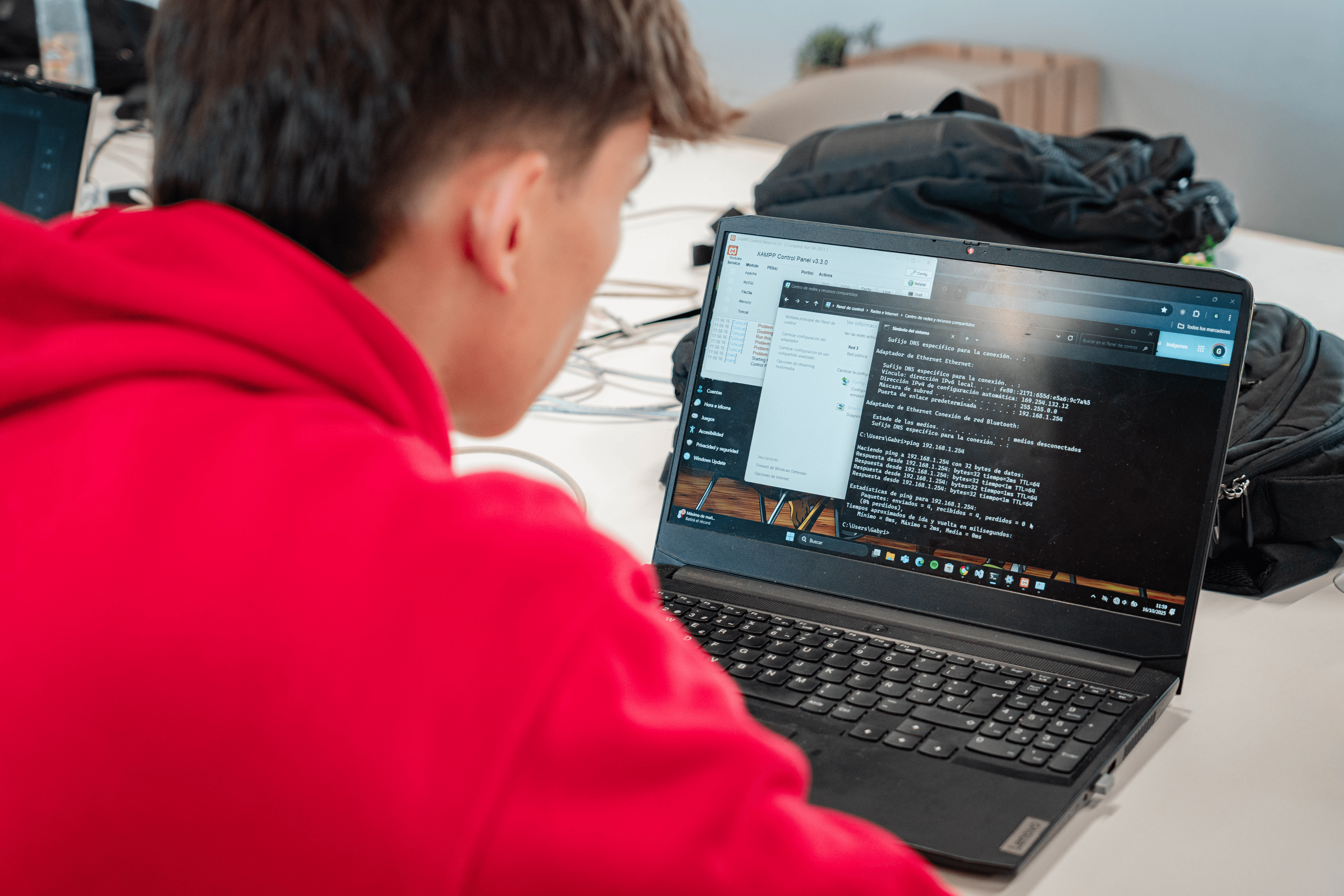

You will learn how to apply technology to problems and projects faced by real-world companies and organisations. This will enable you to understand how to apply your knowledge across different sectors, from healthcare and finance to industry, logistics and digital transformation.

At UDIT, you’ll study in small groups, with close monitoring and constant support from lecturers and academic teams who will track your progress and help you realise your full potential. A more personalised university experience, where you’ll receive practical guidance, ongoing feedback and support throughout your academic and professional journey, so that you can make the most of your talent.


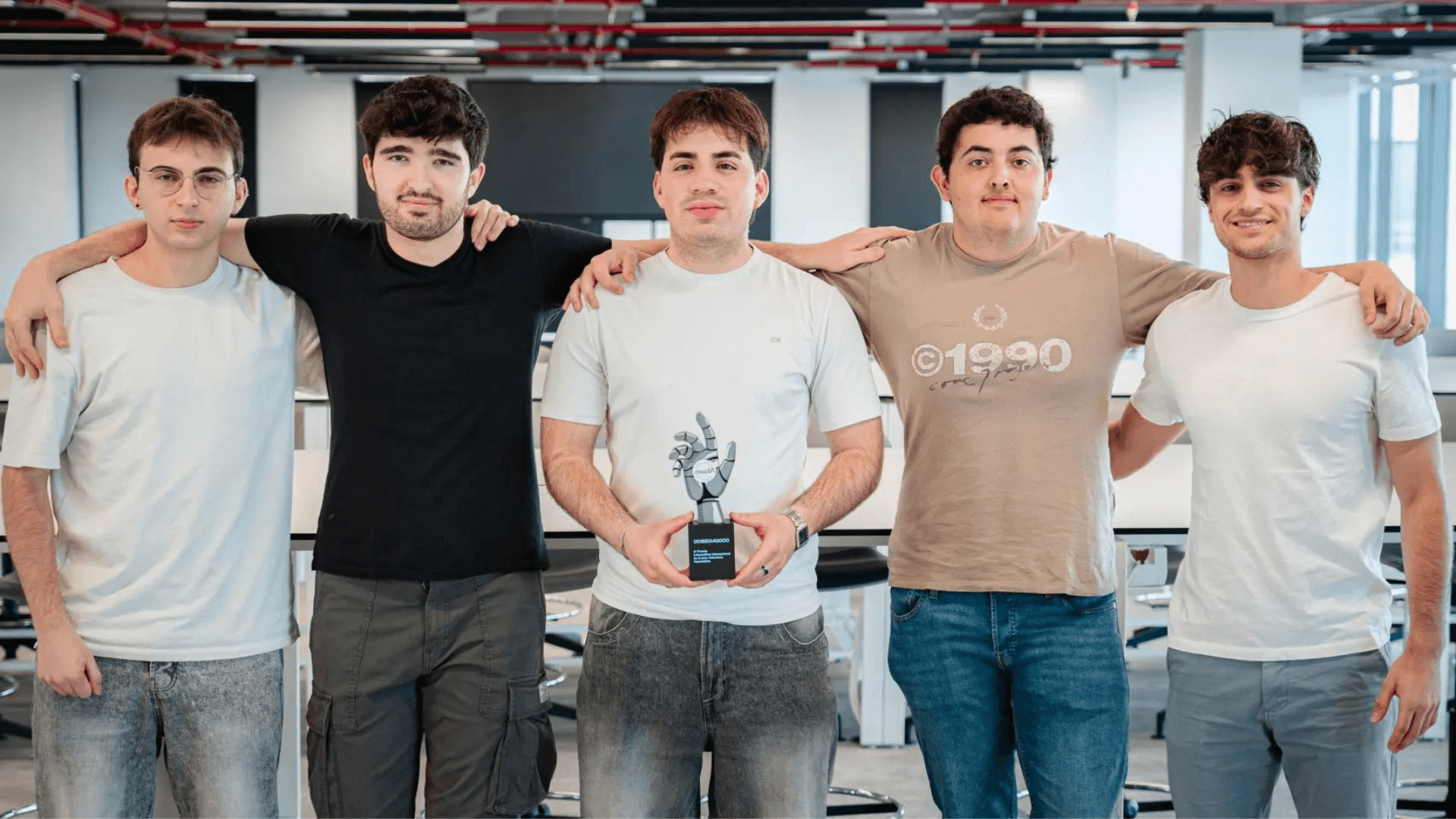

Head of the Bachelor’s Degree in Computer Engineering.
Academic Director of the Technology and Applied Sciences Department at UDIT. A computer engineer with over 10 years’ experience in university-level teaching linked to technology and industry.
Dr. Luis Peña
PhD in Computer Engineering from the Universidad Rey Juan Carlos. Founder of a Technology Startup, awarded by ActuaUPM, focused on the development of tools for the creation of digital content. My research has fo


The aim of the degree is to train professionals who are able to understand technology, business and the context in which it is applied. Through practical, multidisciplinary training that is closely linked to the professional world, you will be able to understand a company’s needs, work in multidisciplinary teams, take part in real-world projects, make technological decisions and apply your knowledge across different sectors.
This approach enables our students to enter the labour market in roles offering high added value,gaining access from the outset to technology-related positions involving greater specialisation and responsibility.
At UDIT, work placements form part of the curriculum and are guaranteed for all students. We work continuously with companies and organisations to bring you closer to the job market and help you gain professional experience whilst at university.


Workspaces equipped with 22-inch Wacom Cintiq graphics tablets, high-performance workstations and professional software, designed to help you develop and visualise your product design projects. An environment where you can conceptualise, model and refine your designs with precision, integrating creativity and technology at every stage of the process.

HP Z2 G6 professional workstations, built to handle demanding projects. They feature an Intel i9-14900K processor, 32 GB of DDR5 RAM, a 12 GB NVIDIA RTX 4070 graphics card and a 1 TB SSD, offering the power, speed and capacity needed to work with demanding software and projects.

A space covering more than 1,000 m² where students develop their projects from concept to prototype. An environment designed for working on, testing and refining solutions under real-world conditions. It forms part of the international network of laboratories promoted by Airbus.

A workshop space where you can work with real materials and processes. From woodworking machinery and physical manufacturing processes to advanced prototyping technologies such as 3D printing, laser cutting, CNC machining, welding and electronics equipment, this is where your ideas are built, tested and turned into objects right from the start.

International awards won by the university in recent years.
Employability in one of the roles most in demand by companies.
National Design Award and the Education and Training Award at the Madrid Open Cities Awards.
Top marks for teaching quality and employability in the QS international rankings.

Incorporate artificial intelligence into your creative process and discover new ways to design, experiment and develop projects that make an impact.

Gain the skills you need to turn ideas into real projects, by learning how to manage, finance and develop initiatives with an entrepreneurial mindset.

Improve your language skills in a practical way, with a focus on real-world objectives, preparing you to communicate with confidence in international contexts.
Because this degree combines a solid technical foundation with an applied, business-oriented perspective, preparing students to develop technological solutions that meet real-world needs. Students first learn to build technology and, progressively, also to decide how it should be used. The degree includes modules on information systems, technology strategy, digital transformation, IT governance, business intelligence, project management and technology service management.
No. Programming is an important part of the course, but the degree covers much more than that: it also covers AI, data, systems, networks, cloud computing, cybersecurity and project management, and teaches students how to apply this knowledge to the real-world needs of organisations.
You’ll work with Windows and Linux and use professional programming and development tools such as Python, Visual Studio, VS Code, React, Vue.js and Arduino.
You’ll learn to work with data and artificial intelligence using technologies such as TensorFlow, OpenCV, MySQL, MongoDB, Tableau and Power BI, as well as networking and infrastructure tools such as Wireshark, Docker and Kubernetes.
You’ll also use tools for design, prototyping and project management, such as Figma, GitHub, Jira and Trello, working with technologies commonly used in professional environments.
It means that students learn to understand what a business needs and how they can address those needs through technology. As well as being able to develop a solution, they understand its purpose, the problem it solves and how it can add value.
Whilst studying for the Bachelor’s Degree in Computer Engineering, we will facilitate your access to the exam leading to the Microsoft Azure AI Fundamentals certification.
If you wish to study the Bachelor’s Degree in Computer Engineering , you can do so without having completed a specific sixth-form qualification, but you must meet the entry requirements set out in Article 3 of Royal Decree 412/2014.
Nevertheless, the recommended entry profile is that of a student with a strong affinity for technology, an outstanding track record in mathematics and a keen interest in problem-solving.
Ideally, you should have studied a Science and Technology A-level course, paying particular attention to subjects such as Mathematics and, where possible, subjects related to Computer Science, Programming, Computing and Technology in general.
The first step is to request information. You can do this via the website, by telephone on 91 555 25 28 or by email: orientacion.universitaria@udit.es.
The next step is to sit the placement test, the aim of which is to assess the student’s academic abilities, enabling us to identify any areas requiring extra support before the start of the course.
Once you have taken the test and been notified of your admission to UDIT, please reserve your place to secure your enrolment for the coming academic year. Places are allocated strictly on a first-come, first-served basis.
Yes, this degree is officially recognised and is valid in Spain.
You should be wary of other qualifications advertised on the market as ‘official degrees’ which, in reality, are not. To check whether a qualification is official, you should consultthe RUCT (Register of Universities, Centres and Qualifications)website at , an official body of the Ministry of Universities that oversees academic regulation and the official recognition of university qualifications.
In the 2027–2028 academic year, the fee for the first year of the Bachelor’s Degree in Computer Engineering at UDIT is €10,880, covering the place reservation and tuition for 60 ECTS credits. This figure comprises a €2,100 place reservation fee, which guarantees a place on the chosen degree programme, and a €8,280 tuition fee, at €166 per credit. New students also pay €500 for the opening of their student file, a fee payable only in the first year. The tuition fee includes student insurance.
Tuition fees can be paid in a single instalment — between 1 and 5 September, with a 3 per cent discount — or, for students from Europe, Latin America and Brazil, in ten monthly instalments from September to June, due on the 5th of each month. Students from other regions must pay the full amount in July, before the start of the academic year; from the second year onwards, they may also opt for monthly payments. To reduce the cost, students may consult the current calls for applications for the UDIT scholarships for Academic Excellence, High Academic Achievement, Young Talents and the Trébol Study Grant, as well as discounts for family members, company scholarships applicable to certain degree programmes and the relevant government scholarships. The award and amount of each grant depend on the terms and conditions of the current call for applications.
Yes. The degree can be studied entirely in English, as well as in Spanish. This enables students to develop their professional profile in English from the outset and broaden their international career opportunities.
This is a Computer Engineering programme with an applied, business-oriented approach, which natively integrates the latest technologies – such as Artificial Intelligence and Cybersecurity – into each of its modules. As well as acquiring a solid technical foundation, students learn to understand real-world business problems, work on projects and apply technology across different sectors.
This degree programme starts from scratch, so it is not necessary to have completed a specific type of sixth-form qualification.
However, given the nature of the degree, a Science and Technology A-level is usually recommended, with a particular focus on subjects such as Mathematics and, if possible, having studied subjects related to IT, programming, computing and technology in general.
Although not essential, previous experience in programming and involvement in personal software development projects are a significant added bonus.
All our degree programmes start from scratch, so it is not necessary to have completed a specific type of sixth-form qualification.
However, given the nature of our degree programmes, it is advisable to have completed a Science and Technology A-level course, with particular emphasis on Mathematics.
In any case, you must meet at least one of the entry requirements set out in Article 3 of Royal Decree 412/2014:
For students from the Spanish education system:
For students from education systems outside Spain:
UDIT does not require a minimum grade for admission to the Bachelor’s Degree in Computer Engineering. However, due to the specialised nature of this degree programme, prospective students will be required to sit specific entrance examinations set by the university.
Of course, as we offer an officially recognised degree, you can apply for all the government grants available for this type of course. What’s more, government grants can be combined with our internal study grants; if you have a good academic record or technology is in your blood, don’t hesitate to apply for all of them. You can find out more via this link.
Number of places on the Bachelor’s degree in in Computer Engineering: 72
Request Information
Fill in the form below, call us on 91 555 25 28 or email us at orientacion.universitaria@udit.es to find out everything you need to know about the degree programmes you’re most interested in.
Come and visit us
Book a visit to our Madrid campus from Monday to Friday between 10.00 and 18.00, or sign up for our Open Days, which take place on Saturdays, or our online information sessions.
Admissions process:
University Degrees: to ensure the best possible match between your profile and your chosen degree programme, the admissions process includes two tests:
Complete your enrolment
Once you have taken the entrance exam and been notified of your admission to UDIT, please reserve your place to secure your enrolment for the coming academic year. Places are allocated strictly on a first-come, first-served basis.
Be part of the creative network that is transforming design, technology and education
Be the first to receive news, events, launches and opportunities from the UDIT world. For curious minds looking to go one step further.

