

MEDIA LAB
A multimedia studio equipped with professional audiovisual production equipment (Canon, Nikon and JVC cameras, lighting, microphones, chroma key screens, etc.) where you can create and produce high-quality content.

Registration Open
Imagine, design and create the solutions that will change the world. Combine technology, design and artificial intelligence to tackle society’s greatest challenges, from creating an immersive virtual reality fashion show to developing smart solutions that reduce food waste in supermarkets.
*Pending verification

If you’d like to find out more, please fill in this form and we’ll get in touch with you as soon as possible. We’ll send you the official prospectus, which contains all the detailed information about the programme, the curriculum, career prospects, the admissions process and much more, so that you can make the best decision.
Design is changing. Artificial intelligence, virtual and augmented reality, and immersive experiences are broadening the scope of what can be created and communicated; it is no longer enough simply to design an image – we need to consider how people experience technology and how to solve problems in new ways. It is against this backdrop that creative technology has emerged, to connect creativity with the possibilities offered by technology and with the ability to anticipate what lies ahead.
As the first official degree in Spain to incorporate future design and strategy into its curriculum, hereyou’ll learn the fundamentals of design and how to create graphic, audiovisual and interactive content. You’ll take these skills further with artificial intelligence, augmented and virtual reality, 3D and creative coding. And you’ll develop a skill that’s becoming increasingly rare: the ability to research people, imagine possible futures and decide what’s worth creating, for whom and using which tools. You won’t be preparing for a specific industry, but rather to design and innovate across all sectors.
From day one, you learn by doing, with projects involving companies right from the first year and lecturers who work in the industry. In your second year, you specialise in Strategy and Futures, and in your third year you begin compulsory work placements at companies such as Accenture, Deloitte, Interbrand, Ogilvy, BBVA or the ONCE Foundation. You’ll compete, travel and live in a unique creative ecosystem where design, fashion, video games and technology come together. With AI changing the rules of the game, the real value lies in those who know how to make the most of it.
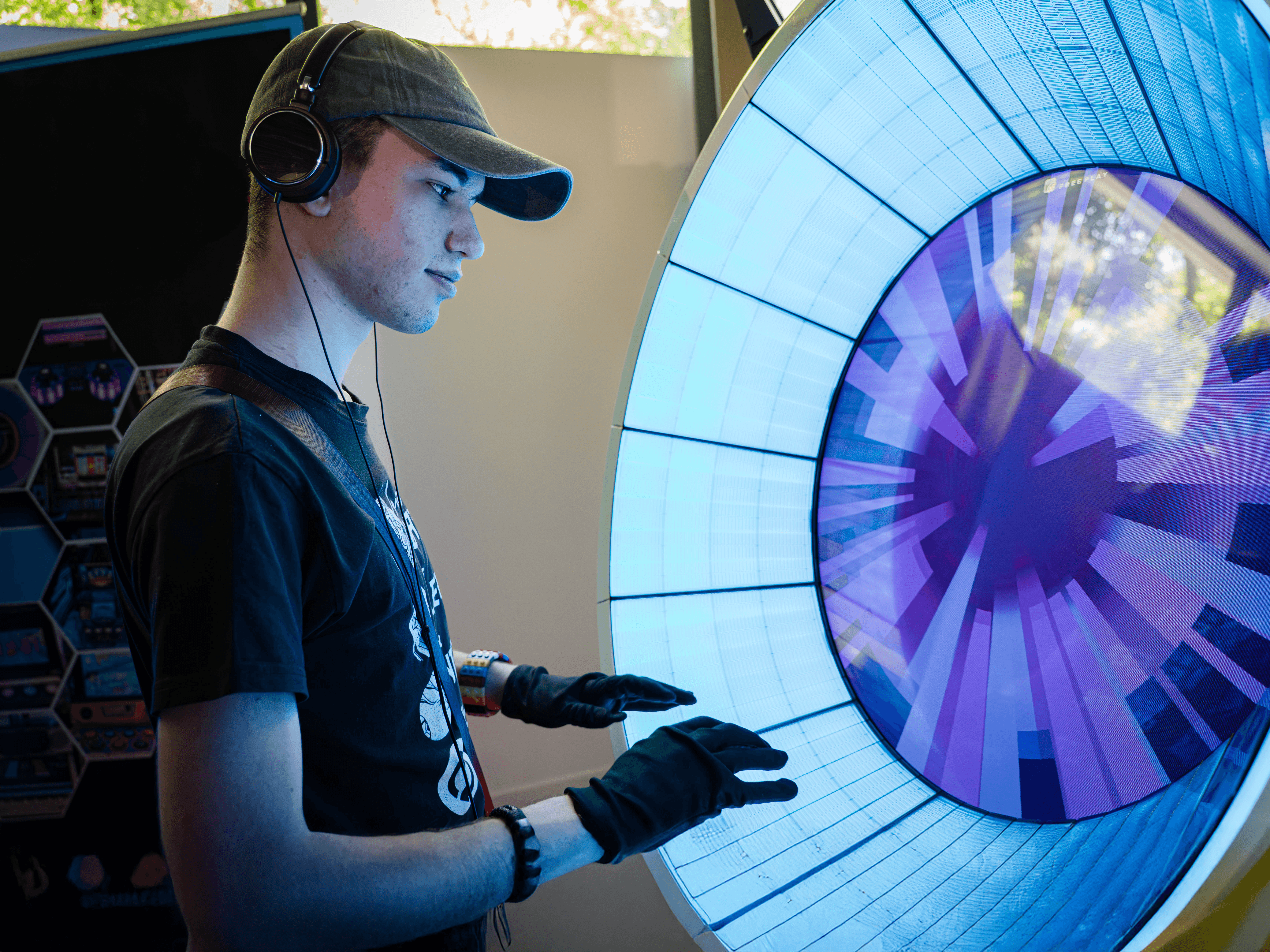

Creative Technology is recognised as a multidisciplinary design discipline whose aim is to develop products, applications and services that improve people’s quality of life in areas such as work, leisure, health, learning and the arts, drawing on information and communication technologies. (Mader and Eggink (2014), in their article “A Design Process for Creative Technology”)

Anyone can learn to use a tool, and more and more people can ask an AI to do the job. What is in short supply are people who know what needs to be designed, for whom and why. That is the speciality of Strategy and Futures: you learn to research people, to imagine various possible futures and to turn them into concrete decisions and projects.
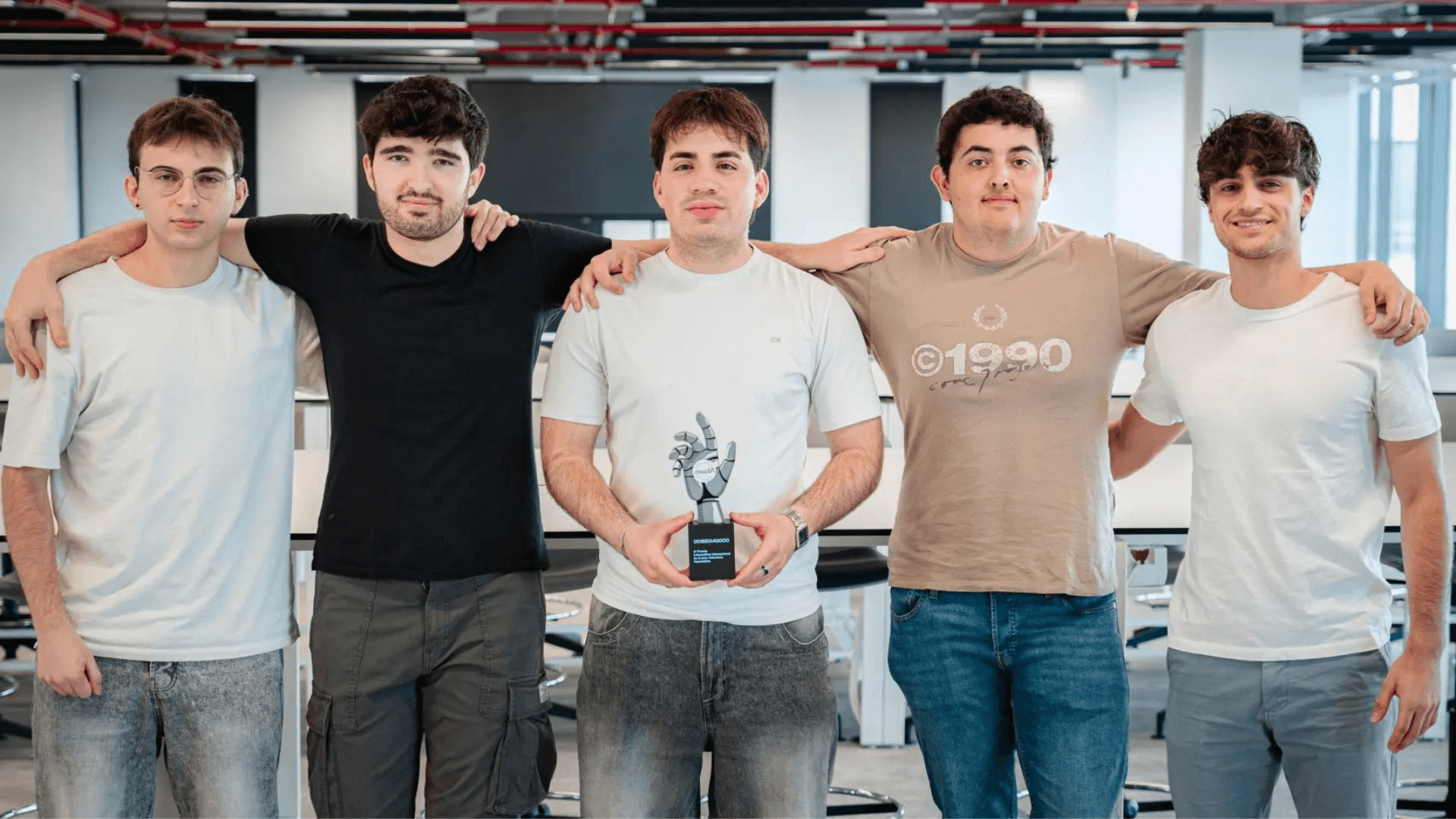
At UDIT, work placements form part of the curriculum and are guaranteed for all students. We work continuously with companies and organisations to connect you with the job market and help you gain professional experience whilst at university.


A multimedia studio equipped with professional audiovisual production equipment (Canon, Nikon and JVC cameras, lighting, microphones, chroma key screens, etc.) where you can create and produce high-quality content.

A state-of-the-art digital fabrication laboratory where you can work with real materials and processes. From woodworking machinery and physical manufacturing processes to advanced prototyping technologies such as 3D printing, laser cutting, CNC machining, and welding and electronics equipment, this is where your ideas are built, tested and turned into physical objects right from the start.

Spaces equipped with 22-inch Wacom Cintiq graphics tablets, state-of-the-art workstations and professional software, designed to enable you to carry out all kinds of projects.

A space covering more than 1,000 m² where students develop their projects from concept to prototype. An environment designed for working on, testing and refining solutions under real-world conditions. It forms part of the international network of laboratories promoted by Airbus.
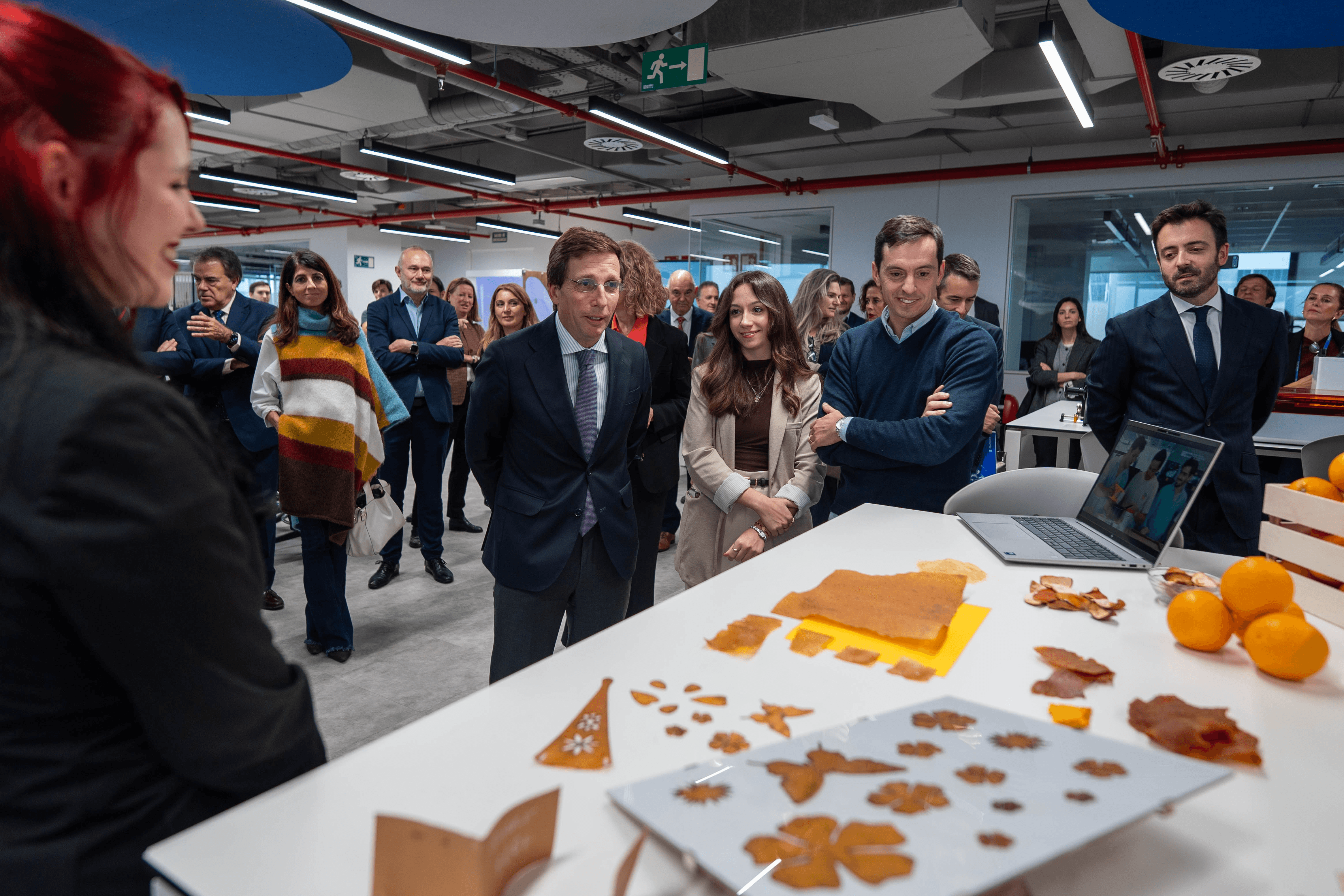
International awards won by the university in recent years.
Employability in one of the roles most in demand by companies.
National Design Award and the Education and Training Award at the Madrid Open Cities Awards.
Top marks for teaching quality and employability in the QS international rankings.

Incorporate artificial intelligence into your creative process and discover new ways to design, experiment and develop projects that make an impact.

Gain the skills you need to turn ideas into real projects, by learning how to manage, finance and develop initiatives with an entrepreneurial mindset.

Improve your language skills in a practical way, with a focus on real-world objectives, preparing you to communicate with confidence in international contexts.
Because it’s a degree designed for the future of design. AI and virtual reality are already changing the way we create, and what the market is looking for are people who know how to use these technologies and decide what to do with them. Here you’ll learn both: how to create using AI, virtual and augmented reality, 3D and creative coding, and how to understand people, imagine possible futures and turn them into projects.
From day one, you’ll learn by doing, with real-world projects and lecturers who work in the industry. In your second year, you’ll specialise in Strategy and Futures, with dedicated modules in the curriculum, and in your third year you’ll undertake a compulsory work placement. You’ll compete, travel and grow within a unique creative ecosystem where design, fashion, video games and technology come together.
And as this is a cross-disciplinary programme, it’s useful in any sector that innovates, from a fashion brand or a sports club to a production company or a hospital. You’ll reach your fourth year with a portfolio, your own unique perspective and a network of contacts. You don’t just study the future of design – you start to build it.
You’ll start by building a foundation in design: visual language, composition, drawing, photography and image editing. You’ll then move on to animation, video, 3D and people-centred design. In the advanced modules, you’ll delve deeper into creative technologies, artificial intelligence, virtual reality, strategy and the design of interactive experiences, as well as undertaking work placements and your final-year project.
It is a design degree that makes creative use of technology. It is not aimed at training engineers to develop technology from scratch, but rather professionals capable of applying technological tools to design content, experiences and solutions.
Combine both aspects. You’ll need to develop your creativity and visual sensitivity, but also learn to use digital tools and understand how the experiences you design work. In addition, you’ll work on research, strategy and the ability to present and justify your proposals.
Yes, the programme includes AI applied to creative work. It forms part of a broader curriculum that encompasses other creative technologies, interactive design, 3D, and augmented and virtual reality. It is not simply a matter of learning how to use a tool, but of integrating it into a creative and design process. Furthermore, the course aims to enable students to learn how to build and adapt their own generative AI systems – a third-year module – (visual libraries, specialised models, assistants), whilst taking intellectual property rights into account.
If you wish to study the Bachelor’s Degree in Design and Creative Technologies , you can do so without having completed a specific sixth-form qualification, but you must meet the entry requirements set out in Article 3 of Royal Decree 412/2014.
The first step is to request information. You can do this via the website, by telephone on 91 555 25 28 or by email: orientacion.universitaria@udit.es.
The next step is to sit the placement test, the aim of which is to assess the student’s academic abilities, enabling us to identify any areas requiring extra support before the start of the course.
Once you have taken the test and been notified of your admission to UDIT, please reserve your place to secure your enrolment for the coming academic year. Places are allocated strictly on a first-come, first-served basis.
Yes, this degree is officially recognised and is valid in Spain.
You should be wary of other qualifications advertised on the market as ‘official degrees’ which, in reality, are not. To check whether a qualification is official, you should consultthe RUCT (Register of Universities, Centres and Qualifications)website at , an official body of the Ministry of Universities that oversees academic regulation and the official recognition of university qualifications.
In the 2027–2028 academic year, the fee for the first year of the Bachelor’s Degree in Computer Engineering at UDIT is €12,560, covering the place reservation and tuition for 60 ECTS credits. This figure comprises a €2,100 place reservation fee, which guarantees a place on the chosen degree programme, and a €9,960 tuition fee, at €166 per credit. New students also pay €500 for the opening of their student file, a fee payable only in the first year. The tuition fee includes student insurance.
Tuition fees can be paid in a single instalment — between 1 and 5 September, with a 3 per cent discount — or, for students from Europe, Latin America and Brazil, in ten monthly instalments from September to June, due on the 5th of each month. Students from other regions must pay the full amount in July, before the start of the academic year; from the second year onwards, they may also opt for monthly payments. To reduce the cost, students may consult the current calls for applications for the UDIT scholarships for Academic Excellence, High Academic Achievement, Young Talents and the Trébol Study Grant, as well as discounts for family members, company scholarships applicable to certain degree programmes and the relevant government scholarships. The award and amount of each grant depend on the terms and conditions of the current call for applications.
Yes. The degree can be studied entirely in English, as well as in Spanish. This enables students to develop their professional profile in English from the outset and broaden their international career opportunities.
You will use professional tools such as Unreal Engine, Figma, Blender, TouchDesigner, After Effects and the Adobe suite. Each one enables you to work on different aspects, ranging from visual design and 3D to interaction and digital experiences. The specific use of these tools varies depending on the modules and projects.
Tools are evolving rapidly. For this reason, training is not viewed solely as learning how to use software, but also as developing the fundamentals of design, research, critical thinking, creativity and problem-solving skills. These skills help people adapt to new tools, although they cannot guarantee what the future labour market will look like.
The recommended entry profile for this degree is that of a student with an interest in design, creativity, visual culture and digital technologies, who wishes to develop innovative solutions to address social, cultural, technological and business challenges.
Students wishing to undertake this degree should possess the following characteristics:
All our degree programmes start from scratch, so it is not necessary to have completed a specific type of sixth-form qualification.
You must meet at least one of the entry requirements set out in Article 3 of Royal Decree 412/2014:
For students from the Spanish education system:
For students from education systems outside Spain:
UDIT does not require a minimum grade for admission to the Bachelor’s Degree in Design and Creative Technologies. However, due to the specific nature of this degree programme, prospective students will be required to sit specific admission tests set by the university.
Of course, as we offer an officially recognised degree, you can apply for all the government grants available for this type of course. What’s more, government grants can be combined with our internal study grants; if you have a good academic record or technology is in your blood, don’t hesitate to apply for all of them. You can find out more via this link.
Number of places on the Bachelor’s Degree in Design and Creative Technologies: 144
*Pending verification
Request Information
Fill in the form below, call us on 91 555 25 28 or email us at orientacion.universitaria@udit.es to find out everything you need to know about the degree programmes that interest you most.
Come and visit us
Book a visit to our Madrid campus from Monday to Friday between 10.00 and 18.00, or sign up for our Open Days, which take place on Saturdays, or our online information sessions.
Admissions process:
University Degrees: to ensure the best possible match between your profile and your chosen degree programme, the admissions process includes two tests:
Complete your enrolment
Once you have taken the entrance exam and been notified of your admission to UDIT, please reserve your place to secure your enrolment for the coming academic year. Places are allocated strictly on a first-come, first-served basis.
Be part of the creative network that is transforming design, technology and education
Be the first to receive news, events, launches and opportunities from the UDIT world. For curious minds looking to go one step further.
