Imagen promocional sobre un evento relacionado con sonidos automáticos y talleres de creación de sensores.
FECyT Competitive Project

The Island of Automatic Sounds (LISA)

Introducing children and young people to sound art through a multi-sensory interactive installation

INTRODUCTION

The Island of Automatic Sounds (LISA) is a project funded by the FECyT as a science communication project in the ‘unique projects’ category. LISA offers an ACTS (Art, Science, Technology and Society) space, featuring sound artist Pedro Buschi and the artistic collective Chicotrópico.

The project has four distinct areas of focus:

  • Public exhibitions from UDIT’s research laboratories. For example, the initiatives launched as part of Science Week 2025
  • Workshops on sensor construction and programming. These took place on the Technology, Innovation and Applied Sciences campus itself (506 Alcalá Street).
  • A sound creation and recording workshop aboard the COSA (Organised Centre for Travelling Sound).
  • Launch of the interactive installation ‘La Isla de los Sonidos’ during the month of June.

As well as its intrinsic importance and appeal, ‘La Isla de los Sonidos’ is the first competitive project that UDIT has secured in its brief but intense history as a university. The support of the OTRI and the astute guidance of the Vice-Chancellor for Research, José Luis Olazagoitia, have been key to this institutional milestone. 

Science Week. Open days at the UDIT laboratories


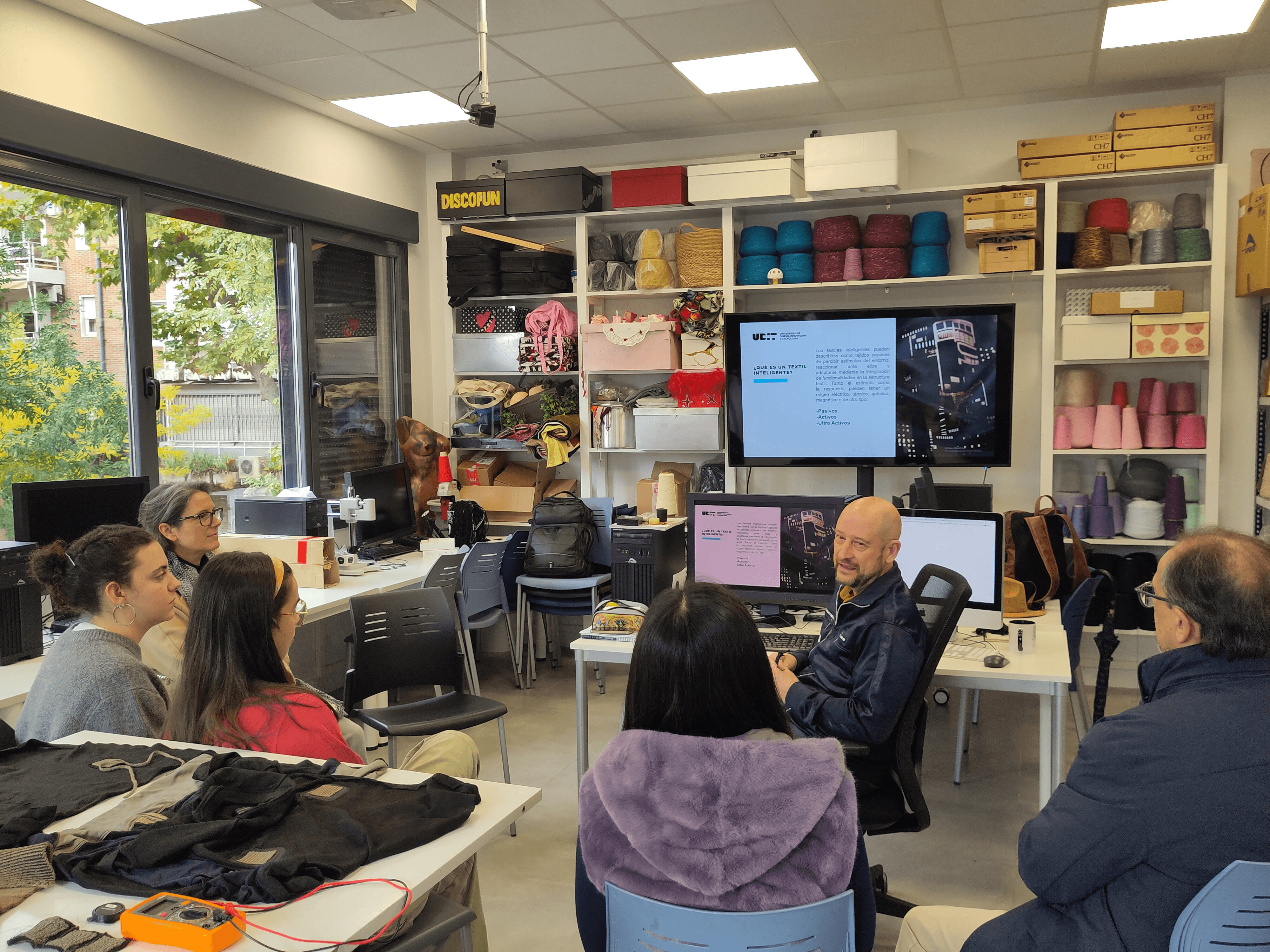
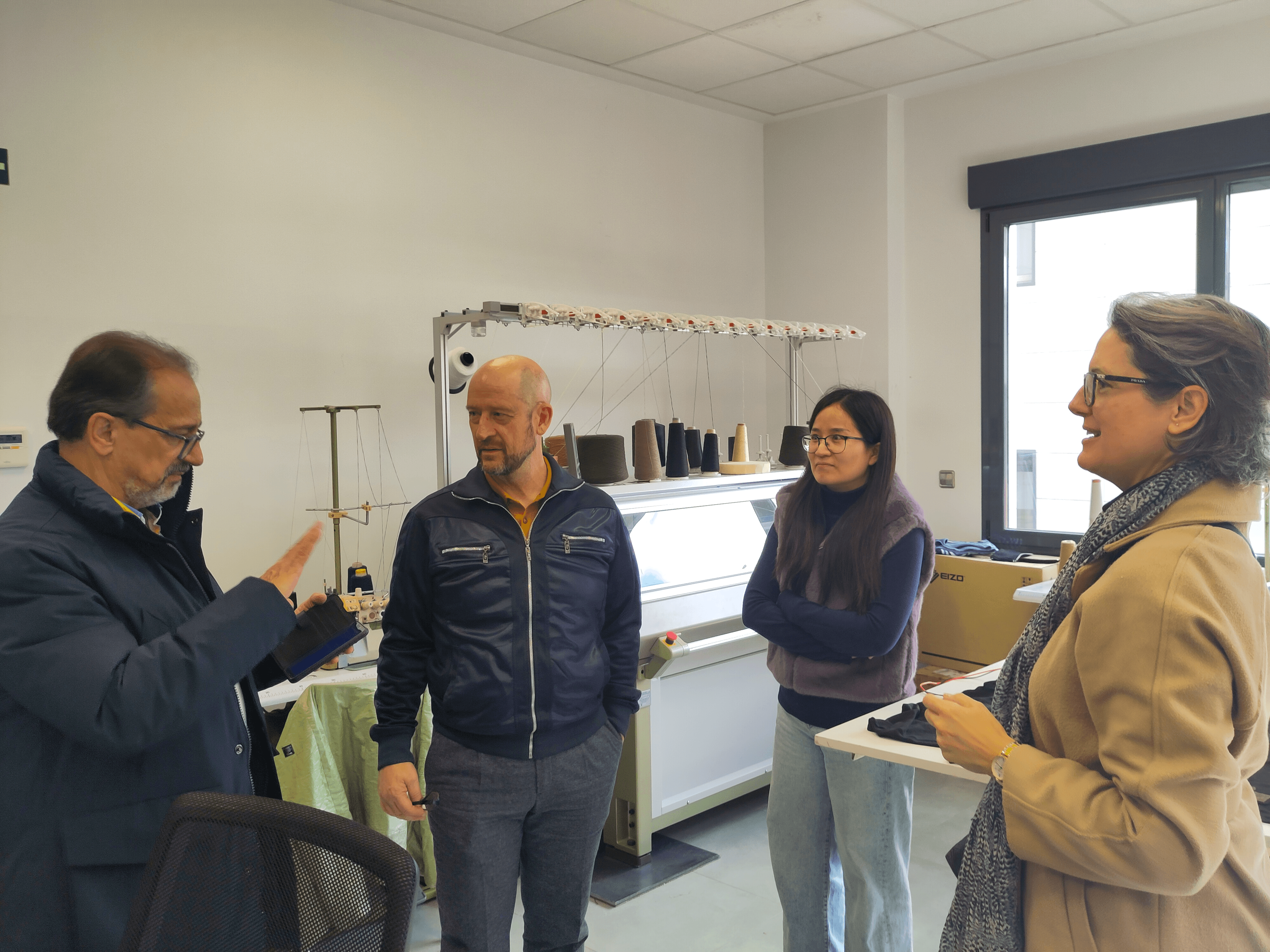
Un grupo de personas se encuentra reunido en un aula con un presentador frente a una pantalla mostrando información.To coincide with Madrid Science Week and as part of the project, the laboratories of the ROBITA-LAB group (Robot Design, Interactive Systems and Artificial Intelligence), the GUMTS group (Research Group on Fashion, Technology and Sustainability) and the DESIRÉ group (Integral Regenerative Design).

The first will showcase projects such as the design and implementation of social robots (UDITO), research into smart insoles (Pisada YOW) and collaboration with biological laboratories to study laboratory animals (PHOTONEU).

The GUMTS group showcases its work with smart textiles and the operation of the Shima Seiki, a computerised knitting machine that is redefining the way we create and consume knitted garments.

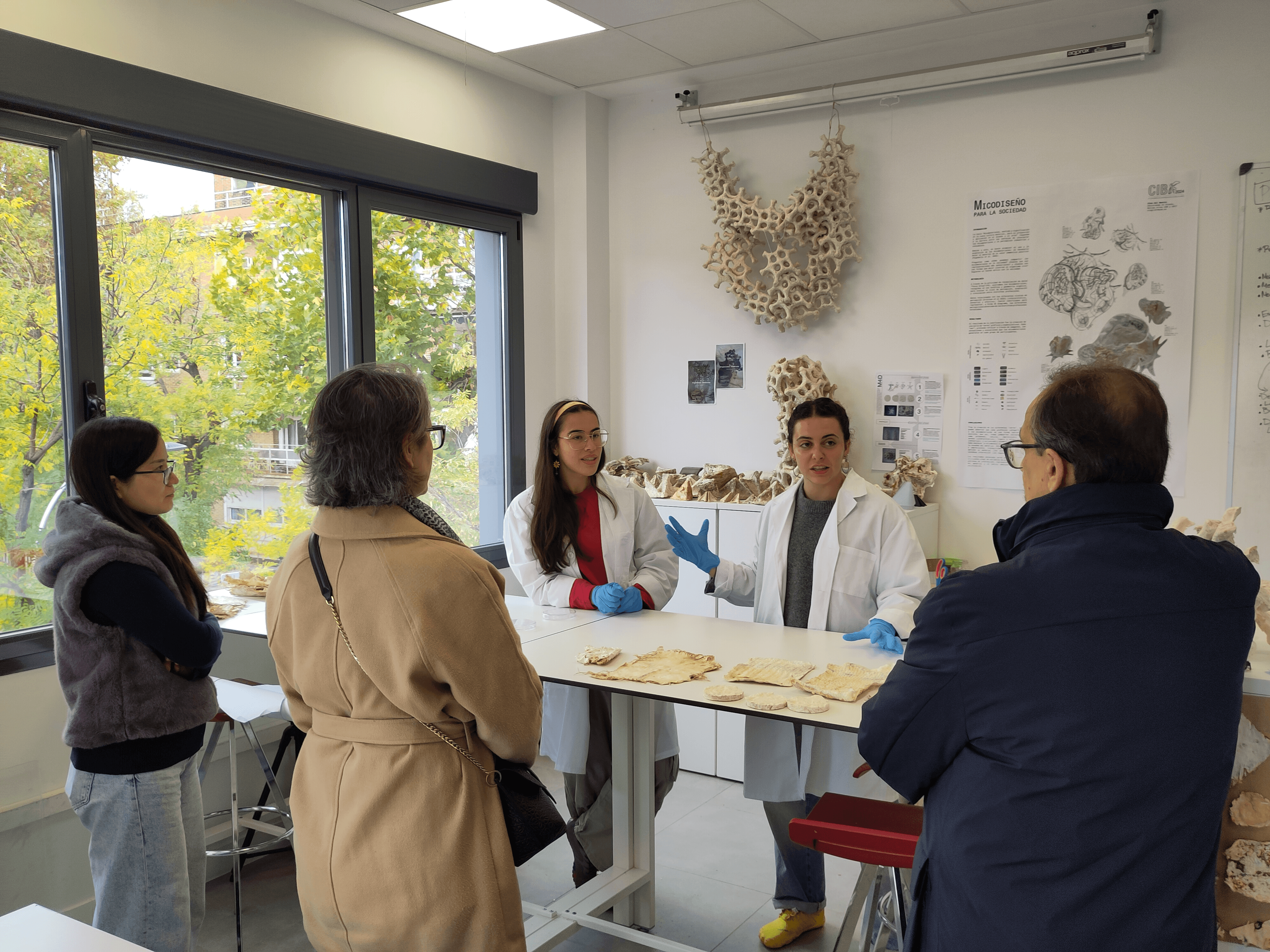
And during the visit to the DESIRÉ group’s laboratory, everything related to biomaterials is showcased, such as product design using mycelium.


Sensor Design Workshop

Throughout March 2026, free workshops will be held for families wishing to explore the world of sensor and actuator programming using Arduino and ESP-32 controllers.

During the STEAM (Science, Technology, Engineering, Arts and Maths) workshop sessions, participants will create interactive, programmable sensors. The workshops are aimed at children and young people, accompanied by their carers. The age range is from 6 to 18 years old. This activity benefits from the special collaboration of the teacher and artist Julián Pérez, a member of the Creative Coding Madrid collective.

The workshop sessions are organised as follows:

  • Day 1 (3 March) Hello World! We’ll spark our first digital spark
  • Day 2 (10/03) The machine that senses: light, sound… and action!
  • Day 3 (17/03) If this happens, then… let it ring and shine!
  • Day 4 (24/03) Inventors in action: step on it and it lights up

Using these sensors, we’ll programme lights and sounds, discovering first-hand the science behind The Island of Interactive Sounds, a large-scale collaborative installation for music and sound creation.

We also want to explore how to improve ways of teaching and learning science, so we’ll need the informed consent of families. Participation will always be voluntary, free of charge and anonymous.

Workshop on sound generation using C.O.S.A.

The Organised Centre for Travelling Sound (C.O.S.A.) is a sound studio housed in a motorhome and run by the Chicotrópico collective. During the session, participants were able to experiment with sound generation, group music-making and the recording process.

At La COSA, participants created the sound foundations and sounds that will later be used in the final installation, La Isla de los Sonidos.

This activity is aimed at children and young people.

This workshop will take place on 16 April 2026 at the UDIT headquarters at Calle de Alcalá, 506 (Madrid), right outside the Suanzes metro station (line 5).

Design and Implementation of the Multisensory Sound Installation

This is the project’s most significant milestone. The installation, shaped like a utopian and magical tropical island, consists of several elements: a bridge with light-up platforms that respond to pressure; a boat whose rudder changes the tempo of the island’s music; a tunnel with distance sensors; stones fitted with accelerometers; a mad parrot that repeats what it hears; and, finally, the volcano, where a magic diamond is found. The diamond features three sensory panels: one for producing rhythms, another for producing melodies and a third for producing harmonies.


The overall aim of the installation is to offer a group of children the opportunity to create a musical piece through play, collaboration and joint creation.

Activation of the Island of Sounds

On 25 June, the sound installation was officially opened with an open event. Since then, a total of around 40 children have taken part in various sessions.


The programme begins with an introductory session on the concept behind the installation: sound co-creation. This is followed by a session of discovery through free play, during which the participating audience discovers how each element of the installation sounds. There are moments of concentration on the music being created, and others of relaxation amongst the sound stones… but what prevails most of all is movement and energetic play.


Project carried out with the collaboration of the Spanish Foundation for Science and Technology, F.S.P.-Ministry of Science and Innovation

Imagen que presenta el logotipo del Gobierno de España junto al logotipo del Ministerio de Ciencia, Innovación y Universidades y la FECYT.